
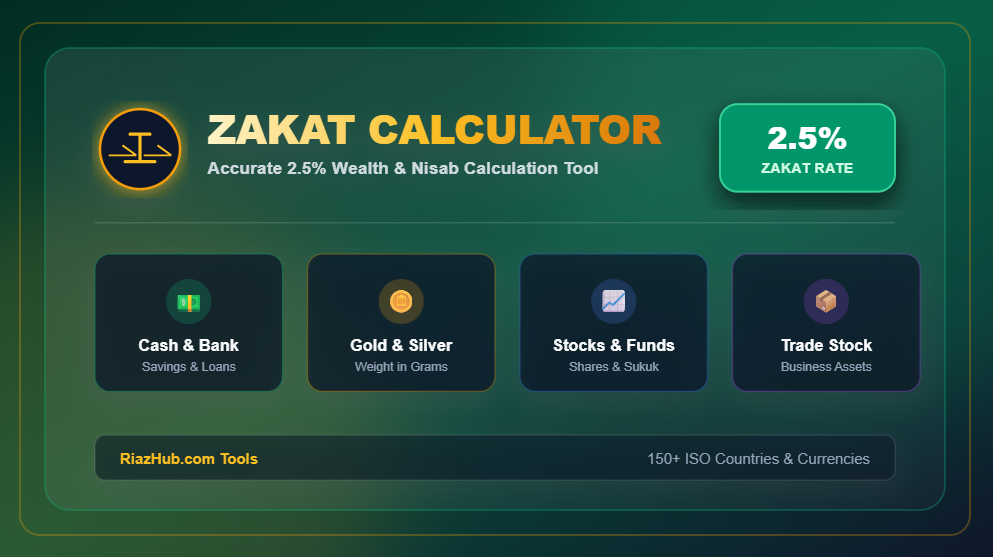
Zakat (obligatory charity) is one of the Five Pillars of Islam. Prescribed as a mandatory 2.5% annual contribution on eligible wealth, it purifies a Muslim’s assets while providing vital relief to those in need. However, calculating Zakat correctly in today’s modern financial landscape—where assets range from cash savings and precious metals to stocks, Sukuk, and business inventory—can often feel overwhelming.
To help believers fulfill this spiritual obligation effortlessly, we have built the free, real-time RiazHub Zakat Calculator. In this ultimate guide, we will walk you step-by-step through the rules of Zakat, how Nisab is determined in 2026, which assets are Zakatable, and how deductible liabilities work.
Need to Calculate Your Zakat Right Now?
Use our 150+ currency real-time calculator with Gold & Silver Nisab toggles.
1. What is Nisab and How is it Determined in 2026?
Nisab is the minimum threshold of net wealth a Muslim must possess before Zakat becomes obligatory. If your total net wealth remains equal to or above the Nisab value for one full Islamic lunar year (Hawl), you are required to pay 2.5% (1/40th) of your total eligible assets as Zakat.
Historically, the Prophet Muhammad (ﷺ) specified two standards for Nisab based on precious metals:
| Nisab Standard | Weight Benchmark | 2026 Approx. Value (USD) | Recommendation |
|---|---|---|---|
| Silver Nisab | 612.36 Grams (595g / 52.5 Tolas) | ~$1,138 – $1,140 USD | Recommended (Benefits more beneficiaries) |
| Gold Nisab | 87.48 Grams (85g / 7.5 Tolas) | ~$11,330 – $11,350 USD | Standard for pure gold bullion holders |
Most classical scholars and modern Islamic bodies recommend adopting the Silver Nisab threshold for general cash and mixed portfolios. Because Silver Nisab has a lower monetary threshold, selecting it ensures that more individuals qualify to pay Zakat, maximizing relief for orphans, widows, and the poor.
You can instantly toggle between Gold and Silver standards and view today’s live threshold in your local currency using the Online Zakat Calculator at RiazHub.com.
2. What Assets Are Subject to Zakat?
Not everything you own is Zakatable. Personal items such as your primary residence, personal vehicle, daily clothing, and household furniture are strictly exempt. Zakat applies exclusively to liquid, wealth-generating, or store-of-value assets held for one lunar year:
Categorization of Zakatable Assets:
- Cash & Bank Holdings: All physical cash at home, checking accounts, savings deposits, foreign currencies, and good debts owed to you that you expect to recover.
- Gold & Silver: All gold and silver coins, bars, bullion, and jewelry (according to majority scholarly consensus).
- Stocks & Investments: Active trading shares are Zakatable at 100% market value. Long-term investment shares are Zakatable on the liquid asset portion (cash + inventory) of the underlying company.
- Business Stock-in-Trade: Wholesale or retail merchandise held for sale is evaluated at current market value on your Zakat due date.
- Real Estate & Property: Land or plots purchased specifically with the intent to resell (speculation). For rental properties, Zakat is due on accumulated net rental profits.
Calculate Your Assets in 150+ Currencies
Enter your cash, gold weight, stocks, and business inventory for instant results.
3. Deductible Liabilities: What Can You Subtract?
Islamic jurisprudence permits deducting immediate short-term liabilities from your gross wealth before determining if your net wealth meets Nisab. Deductible items include:
- Personal loans or credit card balances due immediately.
- Upcoming monthly utility bills, rent, or overdue wages.
- Immediate installments of long-term mortgages or business loans due within the current lunar year.
Note: Future long-term debt principal (e.g., 25 years of future mortgage payments) cannot be deducted in advance.
4. Step-by-Step Formula to Compute Zakat
The standard mathematical formula for Zakat is simple and transparent:
1. Total Zakatable Assets = (Cash + Precious Metals + Stocks + Inventory + Resale Property)
2. Net Zakatable Wealth = Total Assets – Immediate Liabilities
3. If Net Wealth ≥ Nisab → Zakat Payable = Net Wealth × 2.5% (0.025)
To eliminate manual math errors, we strongly encourage utilizing the interactive Zakat Calculation Tool on RiazHub, which automatically formats currency values according to your country’s ISO standards.
5. Frequently Asked Questions (FAQs)
Q1: When is my Zakat due date?
Your Zakat due date marks the completion of one Islamic lunar year (Hawl) from the day your net wealth first reached or exceeded the Nisab threshold. Many Muslims choose to calculate and pay during Ramadan for multiplied spiritual blessings.
Q2: How do I handle gold jewelry worn daily?
While a minority of scholars exempt personal daily-wear jewelry, the majority recommendation (Hanafi school and leading contemporary councils) is to include all gold and silver jewelry in your calculation to be completely safe.
Q3: Can I copy my breakdown to keep a personal record?
Yes! With our RiazHub Zakat Calculator, you can click the “Copy Full Zakat Summary” button to generate a clean, formatted text report of all your input fields and save it in your personal records or notes.
Fulfill Your Sacred Duty with Complete Confidence
Calculate your exact Zakat in under 60 seconds with live market rates and complete privacy.